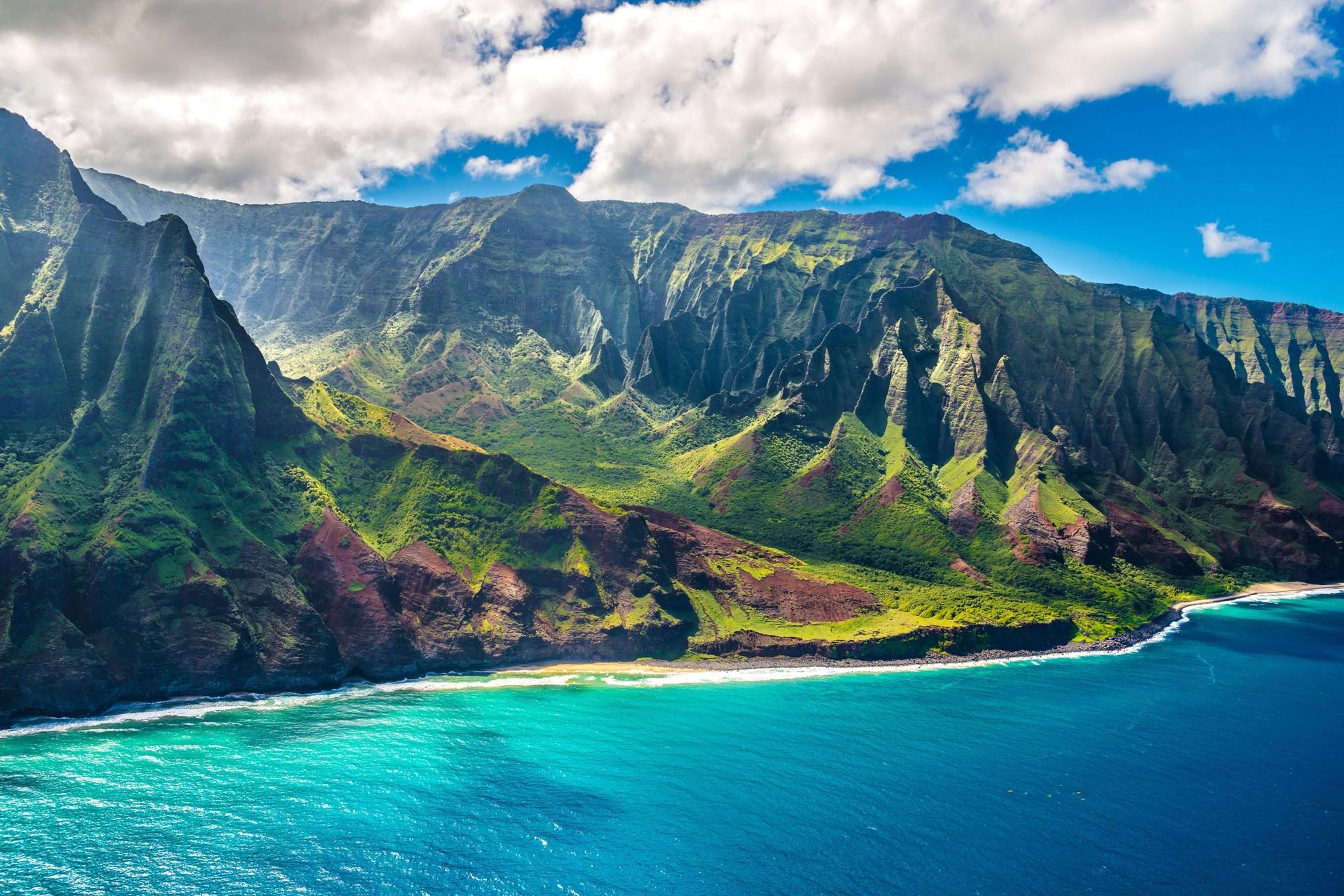
The Na Pali Coast cliffs above a beach on Kauai's northwest shore

Na Pali Guides

Kē'ē Beach and Hā'ena State Park: The Complete Access Guide

Hā'ena State Park takes 900 people a day. Every non-resident needs a reservation from gohaena.com, released 30 days ahead, and it sells out.

Last updated September 2026 · Na Pali Kayak, Hanalei

The short version

No reservations available?

You have not lost the coast — the park is only the first mile of it. There are other great ways to see the coast.

See your options
Hā'ena State Park

What is inside

Kē'ē Beach, the restored lo'i kalo, the Kalalau trailhead, and the day hike to Hanakāpī'ai Beach and Falls

Daily cap

900 people, set by the park's Master Plan

Who needs a reservation

Every non-resident, including passengers, walk-ins and cyclists

Where and when you book

gohaena.com and nowhere else, 30 days ahead at 12:00 a.m. Hawaii time. No same-day sales at the gate

What it costs

Shuttle $45 (ages 4–15 $25, under 4 free), entry included · drive yourself $20 a car per time slot plus $5 a person · walk, bike, or ride with a resident $5

Hawaii residents

Free entry and parking with a Hawaii license, state ID or UH student ID. No reservation needed

Hiking past Hanakāpī'ai

Not allowed on a day reservation — that needs a Nā Pali Coast camping permit from DLNR

Hā'ena is the end of the road. Kūhiō Highway simply stops here, and beyond it sixteen miles of coastline have no road at all. That geography is why this one small park absorbs so much of Kauai's visitor pressure, and why it is now the most carefully managed park in the state.

What is actually inside the park

Hā'ena State Park is small — a beach, a stream mouth, a few acres of restored taro terraces, and a trailhead. Your reservation covers all of it:

  • Kē'ē Beach. A reef-fringed lagoon at the western end of the park, calm and swimmable in summer, and the only place in the park where ocean entry is permitted. It is one of the few guarded beaches on this stretch of coast, though lifeguards are not always on duty — read the beach hazard notes for Kē'ē and look at the water before you get in.

  • The restored lo'i kalo. Terraced taro fields brought back into cultivation by Hui Maka'āinana o Makana, the descendants of the families of Hā'ena. This is the part of the park most visitors walk straight past, and it is the reason the access system exists.

  • The Kalalau trailhead, and the first two miles of the Kalalau Trail to Hanakāpī'ai Beach.

  • Hanakāpī'ai Falls, two miles further up the valley — an eight-mile round trip from the trailhead, and still within what a day reservation allows.

Three things people expect to be inside the park are not. Hā'ena Beach Park — the county park with the campground and Maniniholo dry cave — sits short of the state park entrance and needs no reservation at all. Tunnels (Makua), the North Shore's best-known snorkeling reef, is reached from limited roadside parking just past it, also outside the system. And Limahuli Garden, the National Tropical Botanical Garden preserve at the foot of Makana, sits between the two and books through NTBG on its own separate system.

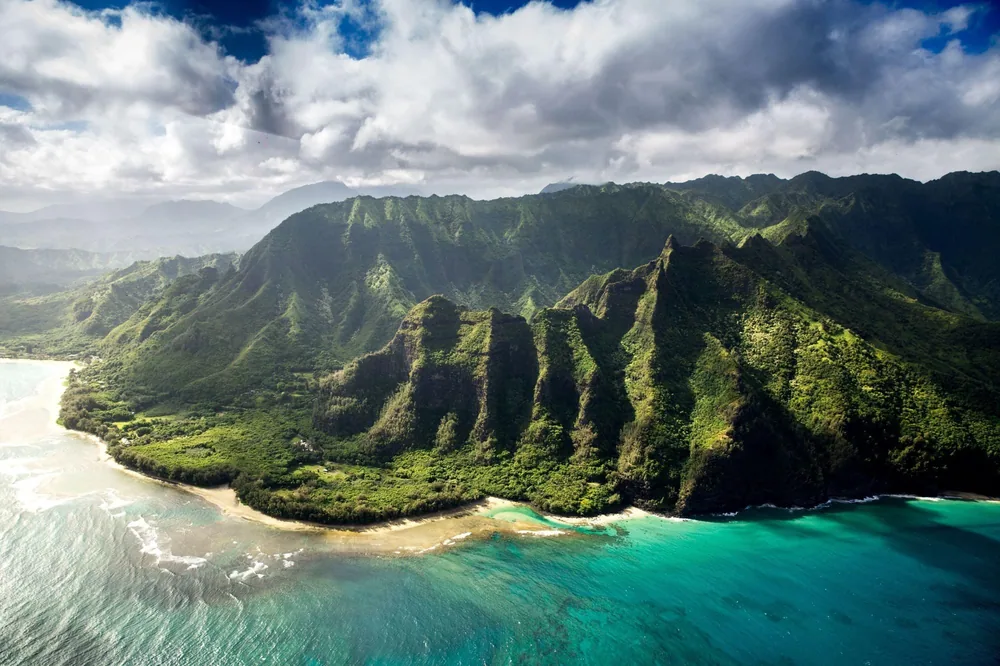
Hā'ena and the Na Pali Coast from the air, where the road ends

The coast begins where the park ends

Kē'ē is the last beach. The next sixteen miles have no road, no trail and no shuttle — and seeing them from a kayak is a once-in-a-lifetime day.

Why there is a reservation system at all

In April 2018 a record rainfall event cut the North Shore off. Hā'ena State Park was closed for more than a year, and the community used the pause to finish something it had been working on for years: a Master Plan that reopened the park with a hard ceiling on how many people it takes — 900 a day, a fraction of the crowd it was absorbing before.

The park is run day to day by Hui Maka'āinana o Makana, the lineal descendants of Hā'ena, under an agreement with Hawaii State Parks, with the reservation platform and shuttle operated by The Hanalei Initiative, a North Shore 501(c)(3) founded in 2018. It is not a ticketing company bolted onto a park. It is the community that has farmed this valley for centuries deciding how many visitors it can host well.

  • The shuttle takes roughly 200 cars a day off Kūhiō Highway — about a 20% annual reduction, more than 50,000 vehicles a year — on a road with one-lane bridges and no shoulder.

  • The program employs more than 20 North Shore residents and supports a dozen other local small businesses and nonprofits.

  • Access fees fund lo'i restoration, farm management and youth programming rather than disappearing into a general fund.

  • Residents get their park back: free entry, free parking, and a day that is no longer spent circling for a space.

The three ways in

Shuttle + entryParking + entryEntry only

Cost

$45 age 16+, $25 ages 4–15, free under 4

$20 per vehicle per time slot plus $5 per person

$5 per person

Who it is for

Almost everyone

Bulky gear, small children, an early alarm and some luck

Walking or cycling in, or riding with a Hawaii resident

Availability

Best on the site — try this first

Very limited. Often gone by about 12:01 a.m.

Good

Time in the park

As long as you like, up to the last pickup at 6:40 p.m.

Your booked window only

Until the park closes

Where you start

Waipā Park & Ride in Hanalei (free parking), or Princeville Makai Golf Club

The park's own lot

On foot or by bike

Gear limits

Small beach gear only — no surfboards, no large coolers

Whatever fits in your car

Whatever you can carry

Prices and time slots from Go Hā'ena, the official booking platform. The shuttle fare has moved seasonally, so confirm at checkout.

Book the shuttle. It is the option with real availability, it includes park entry, it costs less than parking for a couple, and it is the only one of the three that does not put another car on the narrowest stretch of highway on Kauai. Waipā departs every 20 minutes from 6:20 a.m. to 12:40 p.m. and has free parking; Princeville Makai Golf Club runs at 7:00 a.m. and 9:00 a.m. with no parking of its own. Return rides are first come, first served, and the last pickup from the park is 6:40 p.m.

Parking slots run in three windows — morning 6:30 a.m. to 12:30 p.m., afternoon 12:30 to 5:30 p.m., and evening 4:30 p.m. to sunset. Each window is a separate $20 charge, so a full day is $40 or $60 plus $5 a head. Every passenger needs their own entry reservation; a parking booking does not cover the people in the car.

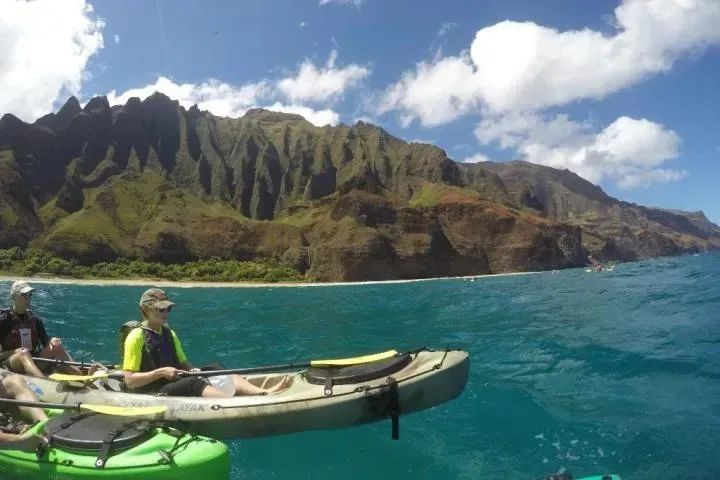
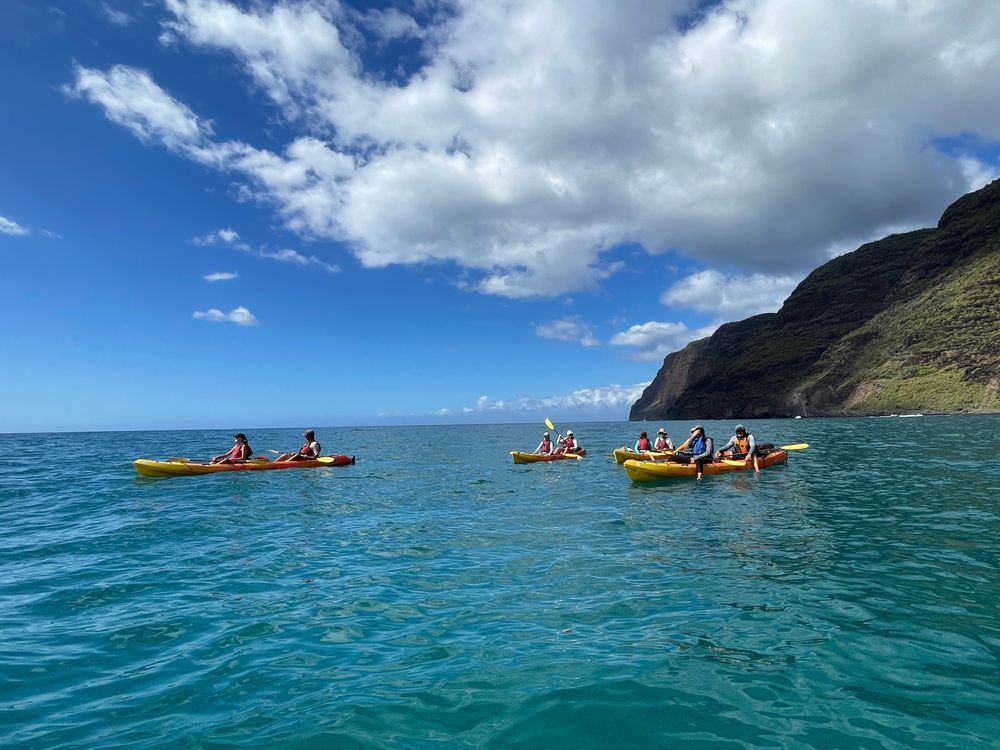
Kayakers paddling below the fluted cliffs of the Na Pali Coast

Or skip the reservation system entirely

Our Hā'ena day trip launches from the county beach park outside the gate. No midnight alarm, no time slot, no gate — just the whole coast.

How to book, step by step

  1. Work out your release date

    Reservations open 30 days before your visit at 12:00 a.m. Hawaii time. Hawaii does not observe daylight saving, so from the US mainland that is 3:00 a.m. Pacific and 6:00 a.m. Eastern in summer, 2:00 a.m. and 5:00 a.m. in winter. Count back 30 days from the day you want and set an alarm.

  2. Go to gohaena.com — only gohaena.com

    There is no other authorized seller, no phone line, no gate booth and no same-day tickets. Anyone selling you park entry on its own is not legitimate.

  3. Pick the shuttle first

    Shuttle inventory is far larger than parking inventory. If your group is flexible about how it gets there, that flexibility is the difference between going and not going.

  4. Book one reservation per person

    Entry is per head, not per booking. Children 4 and over need their own; under 4 ride free on a lap. Have every name ready before midnight — parking slots go in minutes.

  5. If you miss out, come back twice a day

    Unsold inventory is re-released at 12:15 a.m. Hawaii time, and cancellations surface in a wave between 7:00 and 8:00 a.m. daily. Checking those two windows for a few days is how most people who miss the initial drop still get in.

If you have a Hawaii ID

Free access for residents is not a courtesy tacked onto the system — it is the point of it. Hawaii residents enter Hā'ena State Park free, with no reservation, on production of a current Hawaii driver's license, Hawaii state ID, or University of Hawaii student ID. Parking is free too. Minors under 18 are not asked for ID.

  • No booking, no fee, no time slot. Show your ID at the gate and stay until dusk.

  • Bring the physical card. A photo of it, an out-of-state license with a Hawaii address, or a utility bill is not what the gate is checking for.

  • Resident parking is free but finite. The lot is small and the 900-person cap still governs the park, so on a big summer weekend the early half of the day is a much safer bet than the middle of it.

  • Camping is the exception. Staying past dusk needs a Nā Pali Coast camping permit and an overnight parking permit, resident or not.

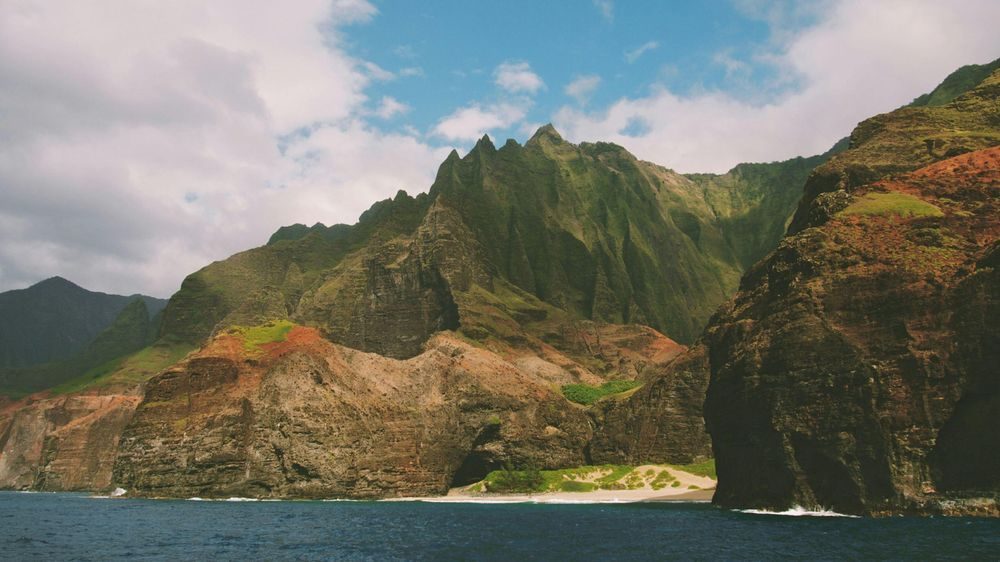
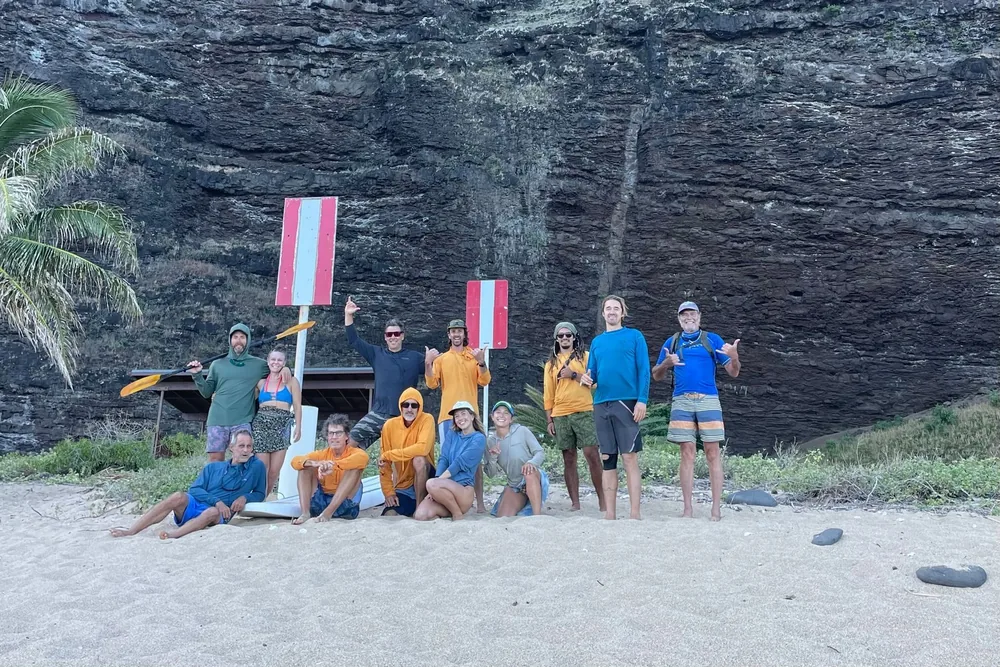
A Na Pali Kayak group on the beach at the foot of the cliffs

Lunch on a beach with no road to it

Sea caves, waterfalls falling straight into the ocean, and a long catered lunch at Miloli'i — a beach with no road to it and no trail in. Summer only.

Bringing visitors when you are a resident

This is the single most misunderstood rule in the system, and it costs people their morning at the gate. Your ID covers you. It does not cover your passengers. Anyone in your car without accepted Hawaii ID has to hold their own paid reservation — the rule is explicit on Go Hā'ena: anyone without accepted ID must purchase a reservation, even when they are with a resident.

The good news is that it is cheap, and there is a product built exactly for this. Your visiting family does not need $20 parking slots or $45 shuttle seats. They need Entry Only passes at $5 per person — the option Go Hā'ena labels with Hawaii resident, or walk, bike. You drive, your resident parking stays free, and each guest pays five dollars.

  1. Count heads, not cars

    Every guest aged 4 and over needs their own entry pass. Under 4 are free. Your own ID covers only you.

  2. Book Entry Only passes 30 days out

    Entry passes come out of the same 900-a-day ceiling as everything else, so they are not unlimited. Book them the moment the date opens at midnight Hawaii time, exactly as a visitor would.

  3. Travel together

    The Entry Only pass is written for people arriving with a resident or on foot or by bike. Bring your guests in your vehicle on your resident parking, and carry your ID.

  4. If entry passes are gone, put your guests on the shuttle

    Shuttle seats are the deepest inventory on the platform. You can drive in on your resident access and have your visitors meet you at the park off a Waipā departure.

Hiking: Hanakāpī'ai, and everything past it

Your day reservation is also your hiking permit, up to a point. It covers the first two miles of the Kalalau Trail to Hanakāpī'ai Beach, and the two miles up the valley to Hanakāpī'ai Falls. One step past Hanakāpī'ai Valley on the main trail and you need a camping permit, whether or not you intend to sleep out there.

DestinationDistance from the trailheadWhat you need

Hanakāpī'ai Beach

2 miles each way

Your park entry reservation

Hanakāpī'ai Falls

4 miles each way (8 miles round trip)

Your park entry reservation

Hanakoa

6 miles each way

Nā Pali Coast camping permit

Kalalau Beach

11 miles each way

Nā Pali Coast camping permit

Distances from Hawaii DLNR's Kalalau Trail page. The full trail is rated difficult and is muddy year-round.

  • You cannot day-hike to Kalalau. Twenty-two miles round trip on that trail is not a day, and going past Hanakāpī'ai without a permit is an offence, not a technicality.

  • There is no cell service anywhere past the trailhead.

  • The trail is slippery year-round — wet rock and clay, with steep ascents and descents from the first quarter mile. Trail runners or boots with real tread, not sandals.

  • Sections beyond Hanakoa are narrow with severe exposure on the ocean side. The state closes the trail past Hanakāpī'ai after storms, sometimes for months, so confirm it is open before you build a trip around it.

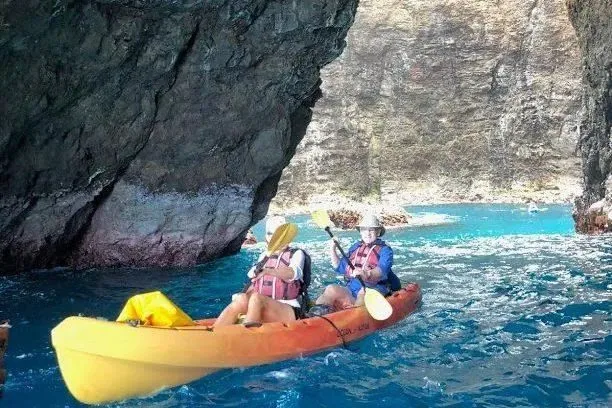
A tandem kayak at the mouth of a Na Pali sea cave

The trail stops at Hanakāpī'ai. The water does not.

Hanakoa, Kalalau, Honopu's arch, the sea caves and Miloli'i all sit past the point a day reservation can take you. The kayak trip passes every one of them.

Camping permits for Kalalau

Camping is a separate system from park access, run by DLNR rather than Go Hā'ena, and it is the hardest reservation in Hawaii to get. The essentials:

Nā Pali Coast State Wilderness Park

Where you book

explore.ehawaii.gov — the state's own system

Released

90 days in advance

Fee

$35 per person per night for non-residents, $25 for Hawaii residents

Maximum stay

5 consecutive nights along the trail, with no two consecutive nights at Hanakoa

Where you may camp

Kalalau and Hanakoa on the trail. Miloli'i, reachable only from the water, is limited to 3 nights

Parking

A camping permit does not include parking. Overnight parking at Hā'ena is a separate permit through gohaena.com, charged per day the space is occupied — one night out is a two-day charge. There is also an overnight park-and-ride option at Ali'i Kai Resort in Princeville via the North Shore Shuttle

We have written the long version of this separately, including the release-date arithmetic and the walk-in strategy: Na Pali Coast Camping Permits: How to Actually Get One.

What the day is actually like

What to expect

Park hours

7:00 a.m. to 7:45 p.m. in summer (April 1 to Labor Day); 7:00 a.m. to 6:45 p.m. the rest of the year. The parking lot opens at 6:00 a.m.

Shuttle hours

6:20 a.m. to 6:40 p.m., last pickup from the park at 6:40 p.m.

Drive from Hanalei

About 20 minutes on a good day, longer behind a rental convoy or at a one-lane bridge

Facilities

Restrooms and drinking water at the park. No food, no shop, no gear rental, no lockers

Best time to be there

Early. Mornings are calmer, clearer, and cooler for the Hanakāpī'ai hike

  • Reef-safe sunscreen, water, and more water. There is nowhere to buy anything past Hanalei.

  • Shoes you can hike in, even if you only plan to swim. People change their minds at the trailhead.

  • Snorkel gear if you have it. Kē'ē's lagoon is genuinely good on a calm summer morning and there is nowhere to rent at the park.

  • Small beach gear only if you are on the shuttle — chairs, umbrellas and snorkel sets are fine; surfboards and big coolers are not, and there is no storage at the park.

  • Cash or card for nothing at all. Everything is prepaid; bring what you need for the day.

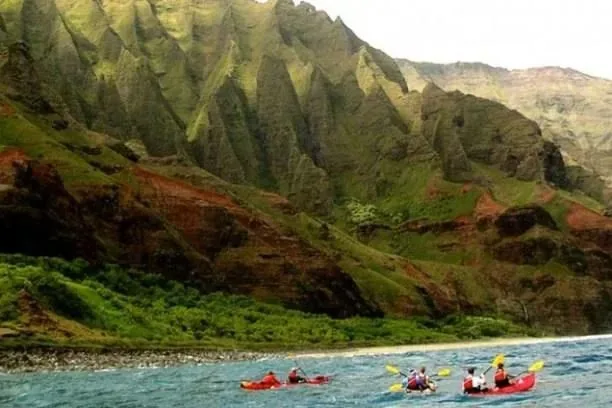
Kayakers beneath the fluted green cliffs of the Na Pali Coast

More adventurous group?

Seventeen miles of the Na Pali Coast under your own paddle, lunch on a beach with no road to it, and a van waiting at Polihale. It is the most physically demanding commercial trip on Kauai, and the one people talk about for years.

No reservation? Here is what you can actually do

Most people who end up on this page are here because the date they want is sold out, or because they found the system three days before their flight. It is worth saying clearly: the park is not the coast. Kē'ē is the last beach before the Na Pali Coast begins. Everything the coast is famous for — Hanakoa, Kalalau, Honopu's arch, the sea caves, Miloli'i — starts past the point a day reservation can take you. There are several good ways to see it, and one of them puts you closer than all the others.

  • Kayak the entire coast

    No park reservation · Ask us about dates

    The closest you can get to this coast, and the only one of these that lands on it. You check in at our shop in Hanalei, launch from Hā'ena Beach Park — the county park outside the state park gate — and paddle all 17 miles to Polihale, stopping for a catered lunch at Miloli'i, a beach with no road and no trail to it. Nothing about the Go Hā'ena system applies to this trip. It is also the hardest day on the list: about seven hours of paddling on open ocean, and real fitness is not optional.

    See the Hā'ena day trip
  • Boat tour

    Hanalei in summer, west side year-round · No reservation

    Catamarans, rafts and Zodiacs all run this coast without touching the park. A catamaran is the comfortable choice — four to seven hours, snorkeling, room to move around. A raft or Zodiac is smaller, faster and wetter, and gets into the sea caves. Book a boat if you get seasick, have a bad back, are traveling with young children, or simply want to relax.

  • Helicopter

    Year-round · No reservation

    The most coast in the least time, and the only option that also shows you the interior — Waimea Canyon, Mount Wai'ale'ale, the valleys from above. About fifty minutes, no fitness required, and the one thing on this list that still works in February.

  • The beaches outside the gate

    Free · No reservation

    Hā'ena Beach Park, Tunnels, Hanalei Bay and 'Anini are all outside the system and cost nothing. If what you actually wanted was a North Shore beach day rather than the Na Pali Coast, this is the easy answer.

    Where to go instead

  • Keep trying for the park

    12:15 a.m. and 7–8 a.m., Hawaii time

    Unsold inventory is re-released at 12:15 a.m., and cancellations surface in a wave between 7 and 8 a.m. daily. Checking those two windows for a few days is how most people who miss the initial drop still get in — and shuttle seats last far longer than parking.

    How the booking windows work

Cost, seasickness risk, weather cancellation and what you actually see from each of these are set out side by side in our full comparison of Na Pali tours.

Why the kayak trip is the answer to this particular problem

Our Na Pali Day Trip from Hā'ena is not affected by the Go Hā'ena system at all. You check in at our shop in Hanalei, we shuttle you to the launch at Hā'ena Beach Park — the county park outside the state park gate — and you paddle the entire 17-mile coastline to Polihale, where our van is waiting. No midnight alarm, no time slot, no gate.

  • You see the part nobody else sees. Hanakāpī'ai is the first valley. Past it are Hanakoa, Kalalau, Honopu and Miloli'i — eleven more miles of cliff, waterfall and sea cave that no day reservation and no shuttle can reach.

  • You land where almost nobody lands. Hawaii permits commercial kayak landings at Miloli'i, and DLNR lists just three kayak companies authorized to do it. Lunch is on a beach with no road, no trail and no other way in.

  • Closer than anything floating. Boats hold off the cliffs. A kayak goes into the caves, under the waterfalls and along the rock at a distance a catamaran physically cannot.

  • One booking, whole day handled. Shuttle, guides, boats, gear, lunch and the ride back to Hanalei. Roughly 12 hours door to door, about 7 of them paddling.

  • Better for seasickness, not worse. You are active, low to the water and facing the way you are going — close to the ideal position. The higher-risk seat is a large catamaran sitting in beam swell for hours.

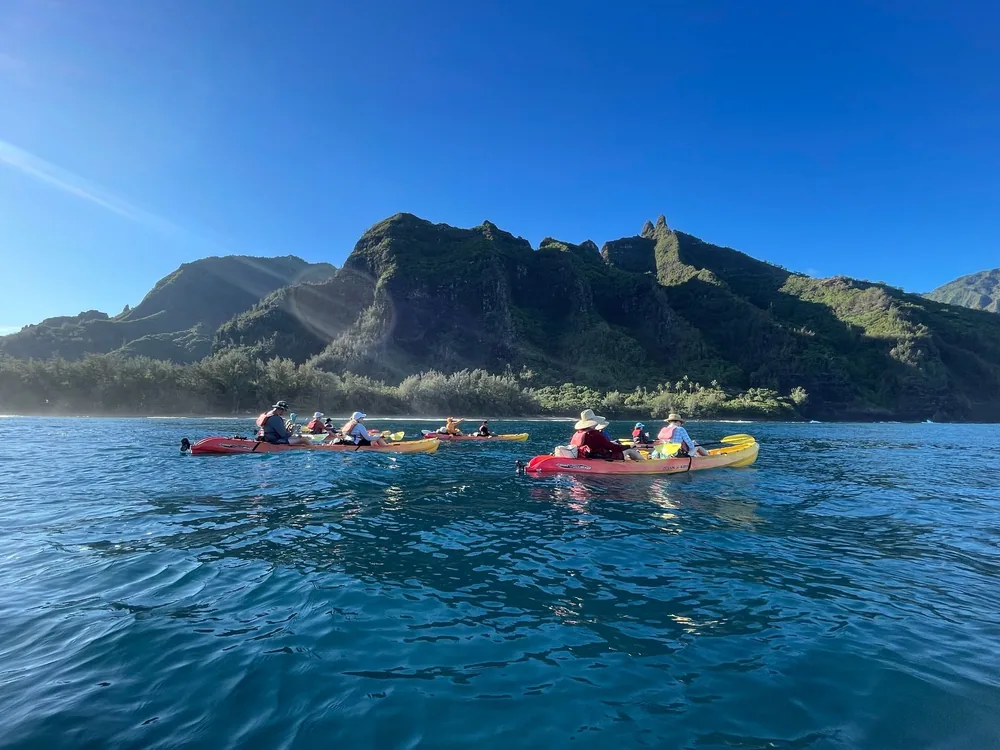
A Na Pali Kayak group paddling off Hā'ena on a clear summer morning

Na Pali Day Trip — Hā'ena to Polihale

Seventeen miles, Hanalei to Polihale, summer only. Dates, what is included, and what the day actually asks of you.

If a kayak is not your trip

There is no shame in any of these, and for a good number of people one of them is simply the better day. We would rather send you to the right trip than sell you the wrong one.

  • Catamaran. The most comfortable way to see the whole coast, four to seven hours, with snorkeling. Na Pali Catamaran runs from Hanalei in summer, which is a 15-minute run to the cliffs; the larger boats run year-round from Port Allen on the south side. Book a catamaran if you get seasick, have a bad back, are traveling with young children, or simply want to relax.

  • Raft or Zodiac. Smaller, faster, wetter, and the boats that get into the sea caves. Mostly out of Kikiaola at Waimea. Rough on backs and necks; brilliant if you want caves without a 17-mile paddle.

  • Helicopter. The most coast in the least time, year-round, and the only option that shows you the interior — Waimea Canyon, Mount Wai'ale'ale, the valleys from above. Fifty minutes, no fitness required, and the one thing that still works in February.

  • The Kalalau Trail, if you have a camping permit and the legs for it. That is a different trip, planned 90 days out — see camping permits and getting to Kalalau.

We have written the even-handed version of all of this — cost, seasickness risk, weather cancellation, what you actually see — at Na Pali Coast Tours Compared: Kayak, Boat, Raft or Heli. It recommends against us where another operator is the better answer.

North Shore beaches that need no reservation

If what you wanted was a North Shore beach day, you have not lost much. Everything below is outside the gate and free.

  • Hā'ena Beach Park (county). Just short of the state park, with parking, restrooms, a lifeguard and Maniniholo dry cave across the road. Strong shorebreak — this is a sit-and-look beach more than a swim beach.

  • Tunnels / Makua. The best snorkeling reef on the North Shore in summer, reached from very limited roadside parking east of Hā'ena Beach Park, or on foot from it.

  • Hanalei Bay. Two miles of sand, a pier, lifeguards and the town behind it. The most forgiving water on this coast in summer.

  • 'Anini Beach. One of the longest fringing reefs in Hawaii and the calmest water on the North Shore — the right call with small children.

  • Limahuli Garden. The NTBG preserve at the foot of Makana, on its own separate reservation system, and one of the best hours you can spend on this coast.

References

Access rules on this coast change, and secondhand blog posts are how people end up at a closed gate. Everything above is taken from the bodies that actually set the rules, and every one of them is worth a look the week you travel:

We paddle out of Hanalei most mornings in summer and we get these questions on the phone every week. If something here has gone out of date, tell us and we will fix it.

Frequently asked questions

Ready when you are

Napali Day Trip – Hā'ena - Main image
Duration7 hours
Group Size2 to 12 people

Napali Day Trip – Hā'ena

Embark on the most popular Napali Day Trip from Hā'ena to Polihale, a 17-mile paddle that takes you along the breathtaking northwest coast of Kauai. This adventure offers a unique opportunity to explore the stunning landscapes and vibrant marine life of the Na Pali Coast. Whether you're an experienced kayaker or a first-timer, this trip promises an unforgettable experience filled with natural beauty and excitement.

from
$320
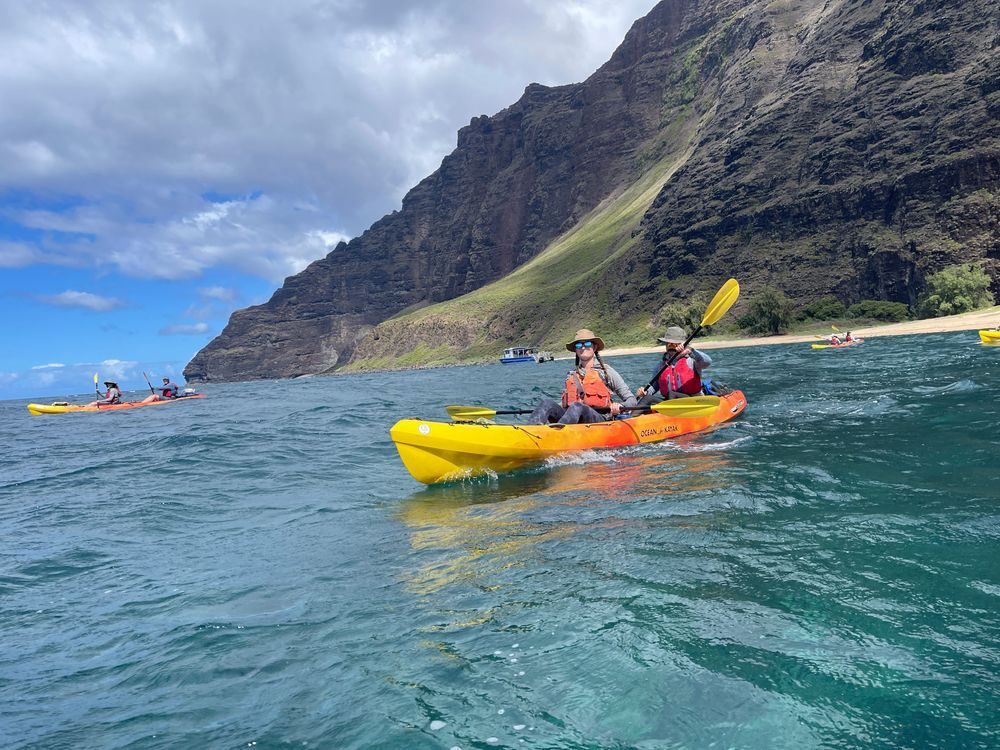
Napali Day Trip – Polihale - Main image
Duration8 hours
Group Size6 to 12 people

Napali Day Trip – Polihale

Experience the beauty of the Na Pali Coast with our exclusive Napali Day Trip to from Polihale to Milolii and back. This trip is designed for groups of 6 to 12, offering a personalized adventure along one of Hawaii's most stunning coastlines. Enjoy the tranquility of Polihale Beach and the thrill of kayaking through crystal-clear waters, all while being guided by our experienced team. This is considered the mini NaPali coast trip, better suited for less experienced kayaker.

from
$270

Book Your Adventure.

Experience the Thrill of Na Pali